




Air conditioning is one of the biggest contributors to electricity consumption in Dubai. With cooling systems running for much of the year, many homeowners are constantly looking for ways to reduce energy costs and improve efficiency.
This is why smart thermostat DEWA bill savings have become a popular topic among Dubai residents. Smart thermostat manufacturers often advertise significant reductions in energy usage, leading many homeowners to ask an important question:
Can a smart thermostat really cut your DEWA bill in half?
The short answer is no—not in most cases.
However, that doesn’t mean a smart thermostat isn’t a worthwhile investment. While it may not reduce your entire electricity bill by 50%, it can significantly improve cooling efficiency and reduce unnecessary AC usage.
Let’s look at how it works.
Why DEWA Bills Are High in Dubai
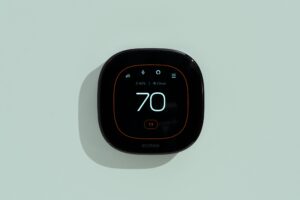
Dubai’s climate places a heavy demand on air conditioning systems.
Unlike cooler regions where AC is seasonal, many Dubai homes use cooling systems throughout most of the year.
Several factors contribute to higher electricity bills:
- Continuous AC usage
- Long summer seasons
- Poor insulation
- Older HVAC systems
- Large villa cooling requirements
- Inefficient thermostat settings
Because air conditioning often accounts for a large percentage of household electricity consumption, improving cooling efficiency can directly impact smart thermostat DEWA bill savings.
What Does a Smart Thermostat Actually Do?
A smart thermostat does not reduce energy consumption by magic.
Instead, it helps your cooling system operate more efficiently.
Common smart thermostat features include:
- Automated scheduling
- Occupancy detection
- Mobile app control
- Remote temperature adjustments
- Energy usage reports
- Smart home integration
- Room-based temperature management
The primary goal is simple:
Reduce unnecessary AC runtime.
That is where most smart thermostat DEWA bill savings come from.
How Smart Thermostats Help Reduce Cooling Costs
1. Preventing Cooling Waste
One of the most common problems in Dubai homes is cooling an empty property.
This happens when:
- Residents forget to adjust temperatures before leaving
- AC systems continue running unnecessarily
- Guests or staff leave cooling active
Smart thermostats allow remote control through mobile apps.
If you forget to adjust your AC, you can do it from anywhere.
This alone can contribute to noticeable smart thermostat DEWA bill savings.
2. Better Scheduling
Many homeowners use the same cooling temperature throughout the day.
This often leads to unnecessary energy consumption.
Smart thermostats allow customized schedules based on:
- Work hours
- Family routines
- Sleep schedules
- Vacation periods
Smarter scheduling reduces wasted cooling and improves efficiency.
3. Occupancy-Based Cooling
Some advanced systems can detect whether someone is home.
When the property is empty, cooling activity is reduced automatically.
This is particularly useful for:
- Working professionals
- Frequent travelers
- Families with daytime absences
Occupancy detection is one of the most effective contributors to smart thermostat DEWA bill savings.
4. More Efficient Temperature Settings
Many people assume lowering the thermostat significantly will cool a home faster.
In reality, this often causes the AC system to run longer than necessary.
Smart thermostats encourage more efficient temperature management and help avoid excessive cooling.
Can a Smart Thermostat Really Cut Your DEWA Bill by 50%?
This is where expectations need to be realistic.
For most households, a thermostat alone will not reduce the entire DEWA bill by half.
Why?
Because your DEWA bill includes more than air conditioning.
It may also include:
- Lighting
- Appliances
- Water heating
- Electronics
- Pumps
- Building-related electricity consumption
Even when AC accounts for a large portion of energy use, a thermostat simply improves efficiency—it does not replace or upgrade your cooling equipment.
Realistic Smart Thermostat DEWA Bill Savings
Actual savings vary depending on household habits.
Homes With Efficient Cooling Habits
If you already:
- Use schedules properly
- Maintain your HVAC system
- Avoid overcooling
Savings may be modest.
Homes With Inefficient Cooling Habits
If you:
- Leave AC running all day
- Frequently overcool rooms
- Forget temperature adjustments
The improvement can be much more noticeable.
This is where meaningful smart thermostat DEWA bill savings often occur.
How to Maximize Energy Savings
The biggest savings usually happen when smart thermostats are combined with other efficiency improvements.
Regular HVAC Maintenance
Dirty filters and neglected AC systems consume more electricity.
Routine maintenance improves performance.
Better Home Insulation
Poor insulation forces cooling systems to work harder.
Improving insulation can significantly reduce energy waste.
Smarter Temperature Settings
Avoid setting temperatures unnecessarily low.
Moderate settings often improve comfort and efficiency.
Zoned Cooling
Cooling only occupied areas reduces overall energy consumption.
This is especially useful in larger villas.
Consistent Scheduling
Smart thermostats work best when schedules match actual household routines.
Apartment vs Villa Savings
Apartments
Dubai apartments generally have:
- Smaller cooling areas
- Better building insulation
- Lower overall energy consumption
Savings are possible, but total reductions may be smaller.
Villas
Villas typically have:
- Larger cooling loads
- Multiple rooms
- Greater sun exposure
- Higher energy consumption
These factors create more opportunities for substantial smart thermostat DEWA bill savings.
Common Myths About Smart Thermostats
Myth: Lower Temperatures Cool Faster
Setting the thermostat dramatically lower does not speed up cooling.
It simply makes the AC system work longer.
Myth: Smart Thermostats Automatically Save Money
Savings depend on proper setup and usage.
Poor configuration limits benefits.
Myth: Every Home Gets the Same Results
Every property is different.
Home size, occupancy, insulation, and cooling habits all influence savings.
Is a Smart Thermostat Worth It in Dubai?
For many homeowners, the answer is yes.
A smart thermostat offers benefits beyond energy savings.
Advantages include:
- Remote access
- Better cooling control
- Smart home integration
- Scheduling automation
- Improved comfort
- Reduced cooling waste
The strongest value comes from better control rather than unrealistic promises of massive bill reductions.
A Simple Example
Consider two households.
Household A
- Leaves AC running all day
- Frequently overcools rooms
- Uses no scheduling
Potential savings: High
Household B
- Uses efficient schedules
- Maintains HVAC systems
- Manages temperatures properly
Potential savings: Lower
The same thermostat can deliver very different results depending on user behavior.
Final Verdict
When discussing smart thermostat DEWA bill savings, it’s important to separate marketing claims from reality.
Can a smart thermostat cut your DEWA bill by 50% on its own?
For most Dubai households, that is unlikely.
However, can it reduce cooling waste, improve energy efficiency, and lower AC-related electricity costs?
Absolutely.
The real benefit comes from smarter cooling management, better scheduling, and greater control over how your home consumes energy.
If your household currently uses air conditioning inefficiently, a smart thermostat can be one of the most practical upgrades you make.